Treating capsular contracture around a breast implant

The formation of a hardened capsule around a breast implant, known as capsular contracture, is a common complication that can occur after breast augmentation or reconstruction. Understanding the causes, symptoms and possible treatments is essential for appropriate care. This article provides key information about this condition, its causes and symptoms, and the treatment options available.

Make an appointment
Capsular Contracture Treatment in Paris | Dr B. Sarfati

What is capsular contracture?

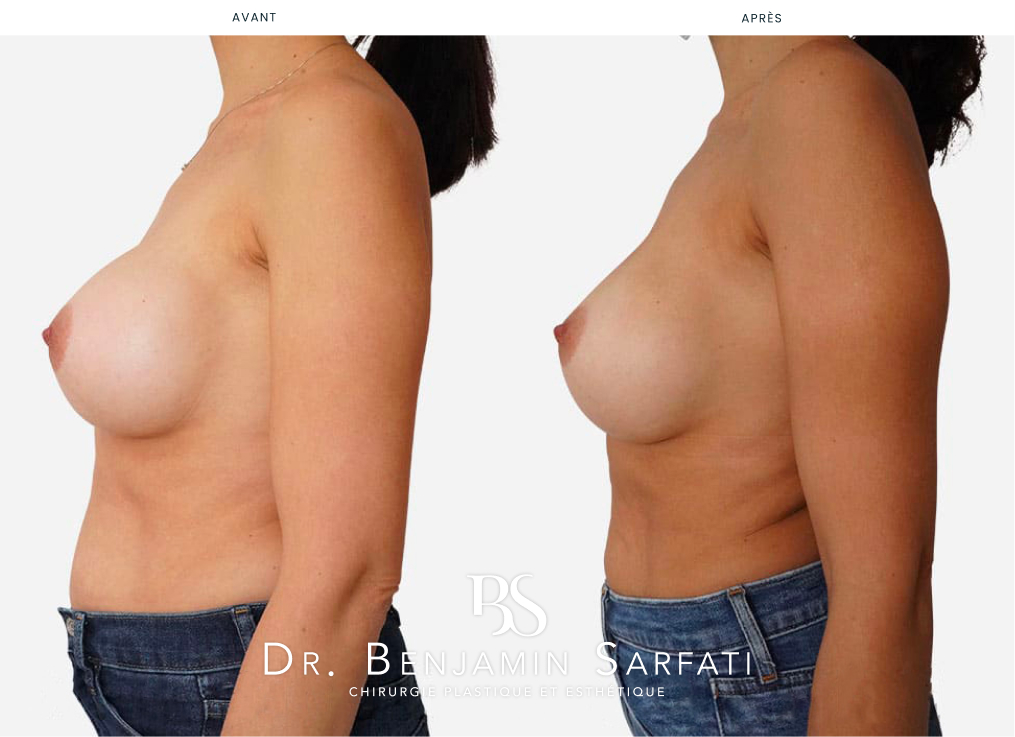
Capsular contracture is the body’s reaction to the presence of a breast implant. When an implant is inserted, the body naturally forms a fibrous capsule around it. This capsule is normally thin and supple, but in some cases it can thicken and tighten, causing pain and deformity of the breast.

Capsular contracture is classified into four grades according to the Baker classification:

  • Grade I: the breast is soft and looks natural
  • Grade II: the breast is slightly firm but looks natural
  • Grade III: the breast is firm and visibly distorted
  • Grade IV: the breast is hard, painful and severely distorted
What causes capsular contracture?

Several factors can contribute to the formation of a contracted capsule around a breast implant.

The body may react to the implant as a foreign object, leading to excessive scar tissue formation. Infection around the implant can trigger an inflammatory reaction, increasing the risk of capsular contracture. A build-up of blood or fluid around the implant can also encourage capsule formation.

Finally, poor-quality implants or smooth implants are more likely to cause capsular contracture, as are the method used to insert the implant and its position (under the muscle or under the breast gland).

What are the symptoms of capsular contracture?

The symptoms of capsular contracture can vary, but often include pain, hardening and distortion of the breast.

Pain or discomfort in the breast is common, as is hardening of the breast, which becomes firmer to the touch. The breast may appear distorted or sit abnormally high.

Capsular contracture is usually diagnosed through a clinical examination. Imaging tests, such as ultrasound or MRI, may be used to confirm the diagnosis and assess the severity of the contracture.

How can capsular contracture be prevented?

Several measures can be taken to reduce the risk of capsular contracture around breast implants:

  • The use of advanced surgical techniques can minimise tissue trauma
  • Choosing textured implants, which have a rough surface, reduces the risk of capsular contracture
  • Following the surgeon’s post-operative care recommendations can help prevent infection and complications

Maintaining good hygiene and watching for signs of infection or complications is crucial. Regular check-ups make it possible to detect any problem early and intervene if necessary.

How is capsular contracture treated?

If capsular contracture develops, several treatment options are available. Non-surgical treatments include medication, such as anti-inflammatories or steroids, to reduce inflammation. Specific massage techniques can also help soften the capsule. Finally, shockwave therapy may be used to reduce capsular contracture.

Surgical treatments include capsulotomy, a procedure in which the fibrous capsule is cut to release the contracture; this can be performed as an open or closed procedure. Capsulectomy, which involves partial or complete removal of the fibrous capsule, is often combined with implant replacement.

In some cases, the breast implant may need to be removed and replaced. Each treatment method has its advantages and disadvantages, and the choice of treatment will depend on the severity of the contracture and the patient’s preferences.

After treatment for capsular contracture, the recovery process can vary depending on the procedure performed. It is essential to follow the surgeon’s recommendations to ensure optimal healing, which may include rest, medication and avoiding certain physical activities.

What is the treatment for a ruptured breast implant?

If a breast implant ruptures, several treatment options are available. The ruptured implant can be removed and, depending on the patient’s preferences, either replaced or not.

Patients often choose to replace the leaking implant with a new one. This surgery can be performed under general anaesthesia and requires careful post-operative follow-up. Recovery after surgery depends on the type of procedure performed and the care required. It is important to follow the surgeon’s instructions to ensure optimal healing.

dr Benjamin Sarfati

DOCTOR BENJAMIN SARFATI

Specialist in breast surgery and intimate surgery